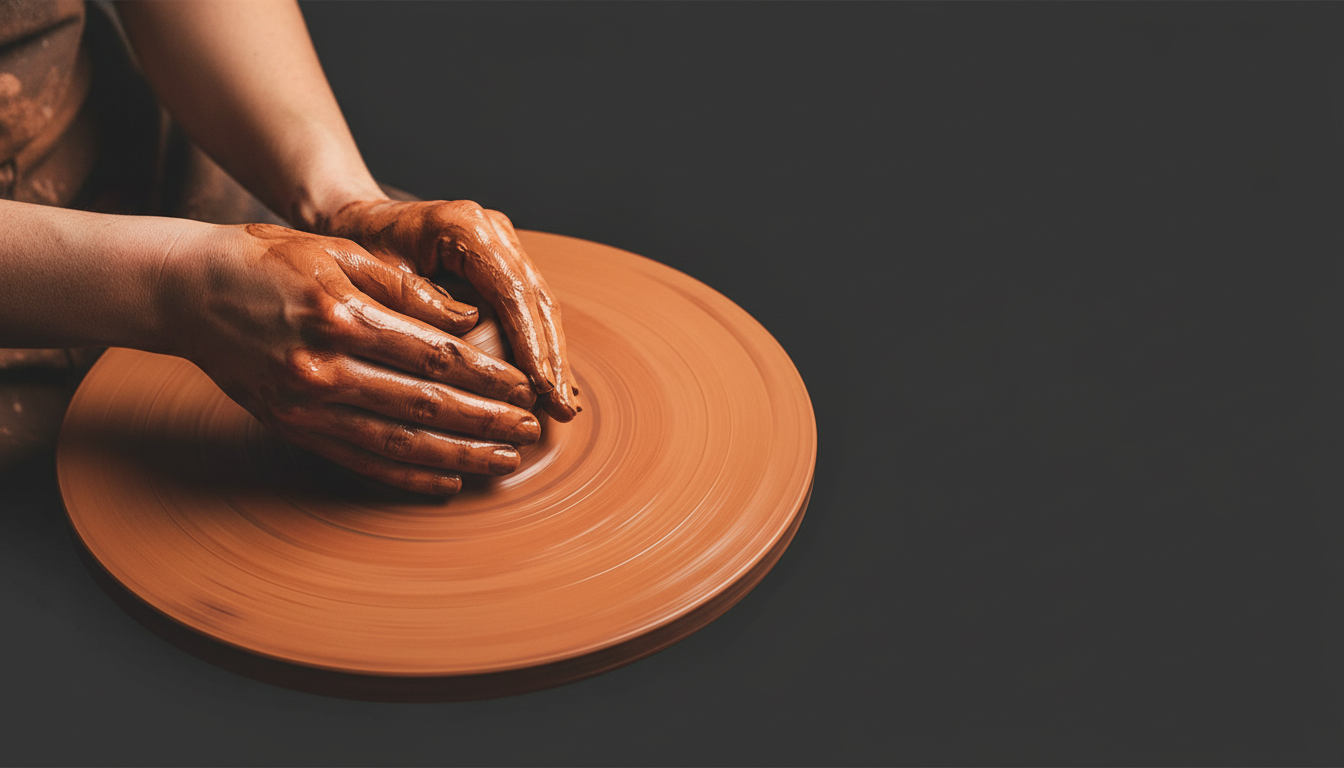
Hand throwing — a quiet practice
Clay teaches patience—the wheel keeps the lesson simple.
We sit at the wheel in the soft morning light, feeling the clay respond. Every form begins with centering—both of material and of intention.
The rhythm of the wheel
There’s a particular rhythm to throwing that takes time to find. The clay must be coaxed, not forced. Too much pressure and the walls collapse. Too little and the form stays thick and heavy.
The wheel spins at a constant rate, but your hands must move in varying speeds—fast pulls to raise walls, gentle pressure to shape curves, and stillness to let the clay settle.
Learning from failure
Most pieces don’t survive. They wobble, crack, or simply refuse to become what you imagined. But each failure teaches something: about water content, about timing, about letting go of expectations.
The best pieces often come from the loosest intentions—when you stop trying to make something specific and simply respond to what the clay wants to become.
Glaze notes
Glaze choice is part memory and part experiment; we keep notes and small test tiles for each firing. The variables are endless: thickness of application, kiln temperature, neighboring pieces, even the weather on firing day.
Some glazes we’ve been refining for years. Others are happy accidents we’re still trying to replicate.
Every mug in our collection carries the memory of these quiet hours at the wheel.
Inspired by this piece?
Shop our collection